Result description
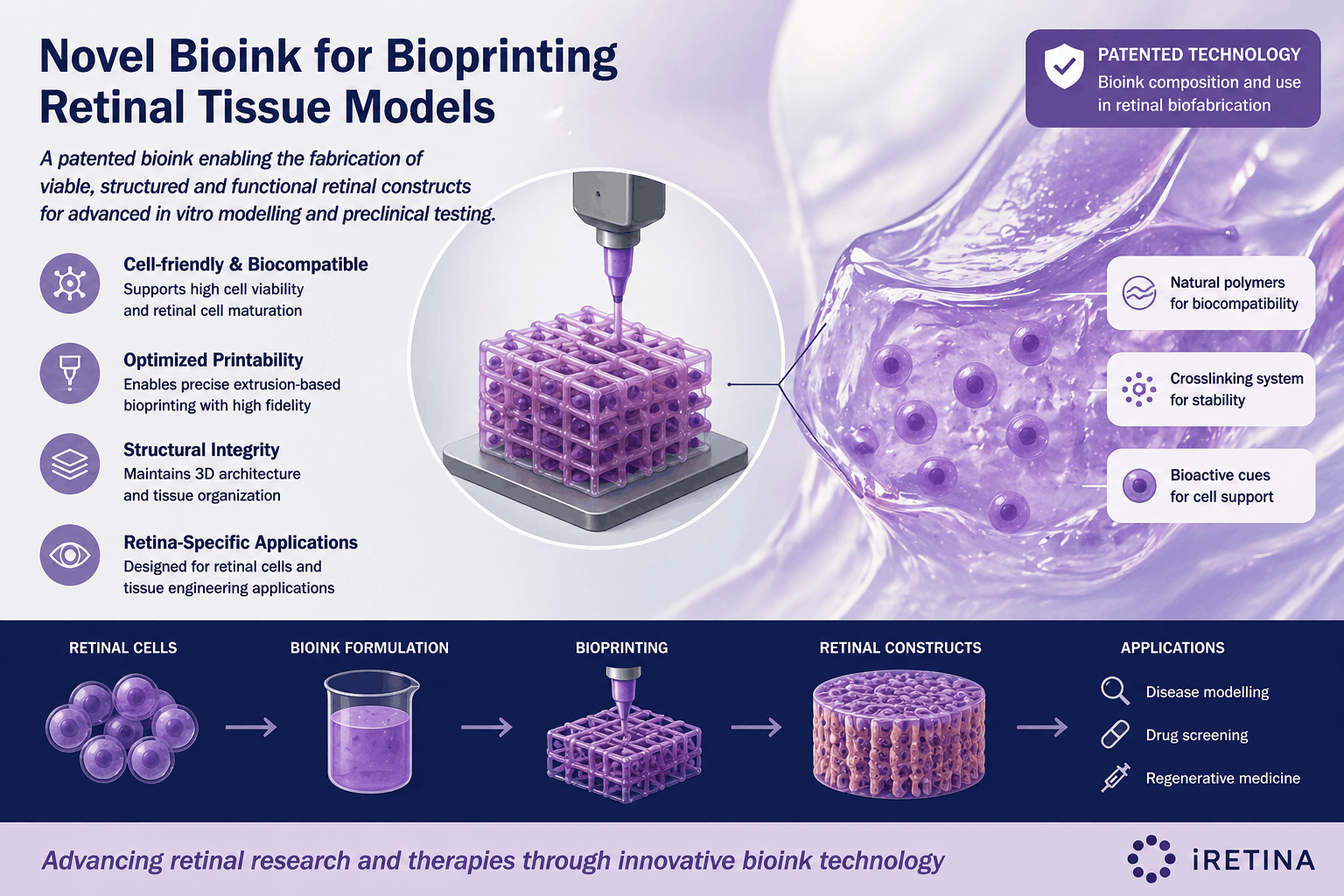
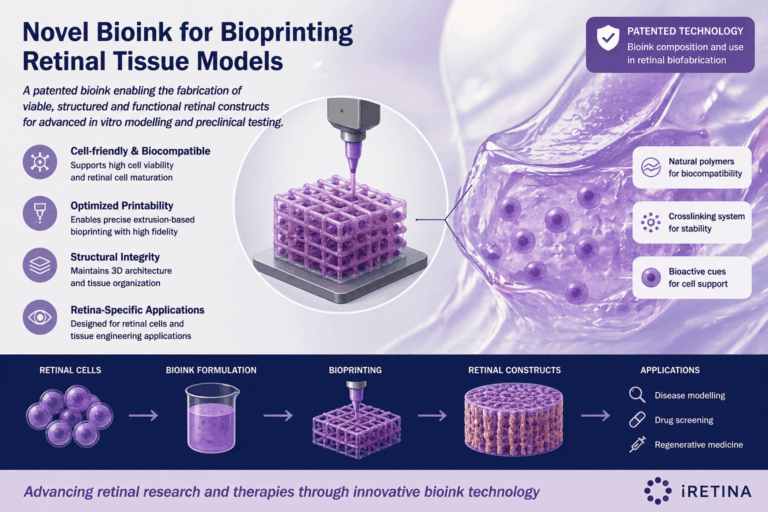
This result consists of a patented bioink and bioprinting approach optimized for the generation of retinal tissue models. The technology integrates tailored material properties with controlled processing conditions to enable the fabrication of cell-laden constructs with high viability, structural integrity, and reproducibility.
The system has been validated using human retinal cell models, demonstrating robust cell survival after bioprinting, homogeneous cell distribution, and sustained culture performance. It also supports improved cellular organization when combined with biologically relevant substrates.
By addressing key limitations in the biofabrication of sensitive neural tissues, this technology provides a reliable platform for producing structured retinal constructs, with applications in disease modelling, drug screening, and preclinical research, and future potential in regenerative medicine.
Addressing target audiences and expressing needs
- Use of research Infrastructure
- Collaboration
- Fellowship to advance my/our research
Partners interested in licensing, co-development, or validation of the bioink technology for applications in retinal models, drug screening, and advanced therapy development. Engagement with biotech companies, bioprinting platform developers, and pharmaceutical stakeholders is particularly sought to support further optimization, scale-up, and preclinical validation.
- Research and Technology Organisations
- Academia/ Universities
- Private Investors
R&D, Technology and Innovation aspects
The technology is at TRL 4, with proof-of-concept validated in human retinal models. Next steps include scale-up, standardization, and preclinical validation (TRL 5–6). We seek public/private funding, private investment, and partnerships with biotech, pharma, and bioprinting companies for co-development and commercialization.
The technology is inherently scalable as a bioink product and associated bioprinting workflow, compatible with existing platforms. Standardization of formulation and protocols enables reproducible manufacturing and integration into industrial pipelines, supporting scale-up for research, preclinical applications, and future commercialization.
The technology is replicable through standardized biofabrication protocols and controlled processing parameters. It has been validated across multiple experiments using relevant retinal cell models, demonstrating consistent performance in terms of cell viability, structural stability, and reproducibility across different experimental conditions.
The technology supports long-term sustainability through its applicability in drug screening and preclinical testing, reducing reliance on animal models. Its compatibility with existing bioprinting platforms and potential for standardization enable integration into industrial workflows, supporting continued development and commercial viability.