
Result description
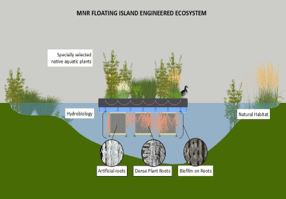
The Surface Water Management toolkit is a portfolio of innovative NBS technologies and strategies demonstrated in euPOLIS pilot cities (mostly TRL 7–8) to support sustainable urban water management. It includes: BRainGain (roof rainwater retention/partial infiltration with UHI reduction and social/biodiversity co-benefits); BioWater Climapond (rainwater-harvesting pond managing stormwater via infiltration/evaporation while creating habitat and an attractive blue feature); Urban Water Metabolism Toolbox + Water Evaporation Module (assessment/simulation tools for improved urban water cycling and evaporation-based cooling); DAMP Stormwater Evaporation Technology (decentralised retention/evaporation for sites where infiltration is not possible, reducing sewer burden and flood risk); and Biopolus MNR Surface Water Treatment (floating planted system using native plants and microbial biofilms to maintain water quality). Components can be deployed standalone or bundled into integrated blue-green infrastructure packages for districts and developments.
Addressing target audiences and expressing needs
- Grants and Subsidies
- Expanding to more markets /finding new customers
- Executive Training
Municipalities/utilities and private developers to pilot and procure toolkit components (retention, evaporation-based cooling, climaponds, surface-water treatment) in districts facing flooding/UHI. Integrator partners (engineering/design–build firms) to offer bundled blue-green packages and long-term O&M. Sites with monitoring data to quantify benefits (flood reduction, cooling, water quality, biodiversity). Funding/support for scaling deployments, standard designs, permitting, and replication toolkits.
- Public or private funding institutions
- Other Actors who can help us fulfil our market potential
- Private Investors
R&D, Technology and Innovation aspects
Most components validated in real urban environments across euPOLIS, one component (Biopolus MNR) is patented. Next steps: scale replication via standard designs, procurement-ready packages, integrator partnerships and monitoring protocols, and expand deployments in new districts/cities. We seek municipalities/developers for pilots and tenders and funding/support for scale-up and bundled delivery.
Yes. Scalability comes from a modular portfolio with repeatable components that fit different urban constraints (with/without infiltration) and can be combined into standard district packages. Delivery can be scaled through integrator partners, tender-ready specifications, and standard O&M/monitoring protocols. Replication improves unit economics as designs, permitting pathways and supply chains are standardised.
Yes. The toolkit creates sustainable value by reducing flood risk and sewer burden, mitigating UHI through evaporation/cooling, improving water quality and biodiversity, and adding attractive, accessible blue-green spaces that support well-being. Value is delivered via deployable technologies plus consultancy and implementation services, with options to bundle components into integrated neighbourhood packages and align them with city climate and water strategies. Economic value is captured through technology supply, design/implementation services and consultancy, often via municipal tenders and private developments, and can be extended through integrator partnerships and service/O&M contracts. Standardisation and monitoring of measurable benefits support long-term adoption, performance assurance and scaling while maintaining quality.