Result description
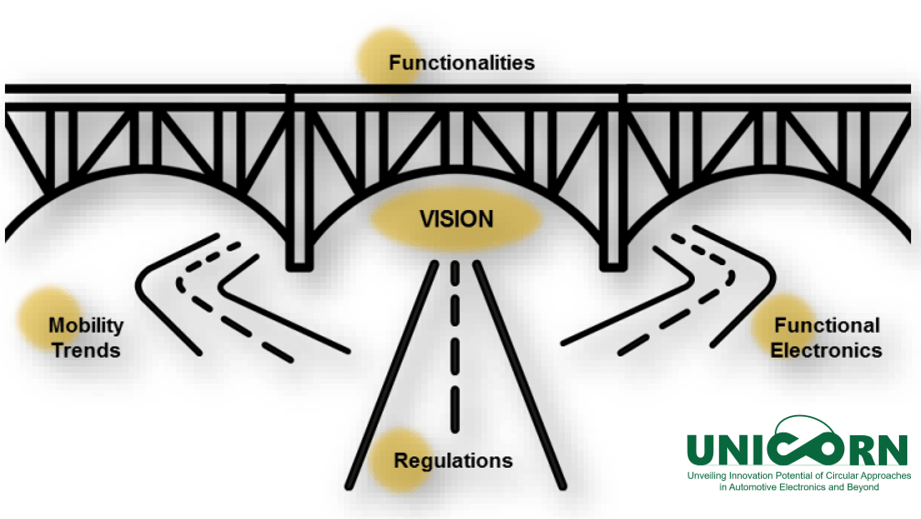
The transition to a circular economy is essential for sustainable mobility and aligns with the EU’s green and digital goals. The RIA UNICORN positions Functional Electronics (FE) as a key enabler of circular automotive systems and outlines a vision and roadmap for integrating printed and flexible electronics into the sector. FE enables lightweight, low-impact and bio-based materials, supported by resource-efficient manufacturing and eco-design, improving modularity, reparability and material recovery. UNICORN’s vision rests on two pillars: extending the functionalisation of printed electronics and using them as a blueprint for greener systems. It targets lower carbon emissions, higher modularity and improved recyclability, supported by a context map of regulation, mobility trends and market needs. The resulting recommendations help policymakers and industry advance from feasibility to large-scale deployment and promote electronics designed for longevity and resource efficiency.
Addressing target audiences and expressing needs
- To raise awareness and possibly influence policy
- Collaboration
UNICORN’s vision targets policymakers, industry and research to accelerate circular functional electronics. Policymakers should align standards, end-of-life rules and incentives. Industry must apply circularity by design and validate scalable solutions. Researchers should advance materials, processes and LCA methods. Collaboration and shared data are key to deploy repairable and recyclable electronics for circular mobility.
- Public or private funding institutions
- EU and Member State Policy-makers
- Research and Technology Organisations
Result submitted to Horizon Results Platform by VDI/VDE INNOVATION + TECHNIK GMBH