
Result description
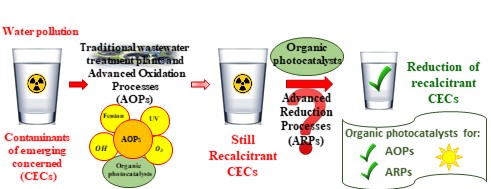
Different new types of phthalocyanines (Pc) organometallic molecules were synthesized and characterized for the preparation of dye sensitized photocatalysts. New inorganic catalysts, different TiO₂/ZnO based catalysts, other semiconductor material-based catalysts, together with phthalocyanine sensitized hybrid materials were prepared, characterized and employed for CECs removal in this project. The phthalocyanine synthesized photocatalyts and semiconductor material-based catalysts were coated on the stainless steel and alumina ceramic surface, respectively. As-prepared materials in such thin film form may be used for both overcoming sophisticated filtration of the suspended photoactive nanoparticles from the reaction medium after CECs treatment period and for scale up studies.
This KER deals with the preparation of new materials for photocatalytic removal of CECs at laboratory scale. The effect of various experimental parameters such as pH, pollutant concentrations, catalyst mass and effect of anions has been evaluated as much as stability and reusability of as-prepared materials at the degradation process of CECs. The reactive oxygen species generated during CECs degradation, radical trapping investigations were carried out by introducing chemical scavengers into the reaction solution containing the catalyst. Possible photodegradation mechanism of photocatalyst was suggested. Based on photocatalytic degradation of CECs results, the as-prepared nanocomposites may be used as efficient and promising photocatalysts in secondary treatments of CECS in water. However, the materials need to be tested on real water samples.
 Oceans, seas and waters
Addressing target audiences and expressing needs
- Grants and Subsidies
Other research institutions to test the developed photocatalysts
- Public or private funding institutions
R&D, Technology and Innovation aspects
Further tests are required in order to test real applicability
Result submitted to Horizon Results Platform by KARADENIZ TEKNIK UNIVERSITESI