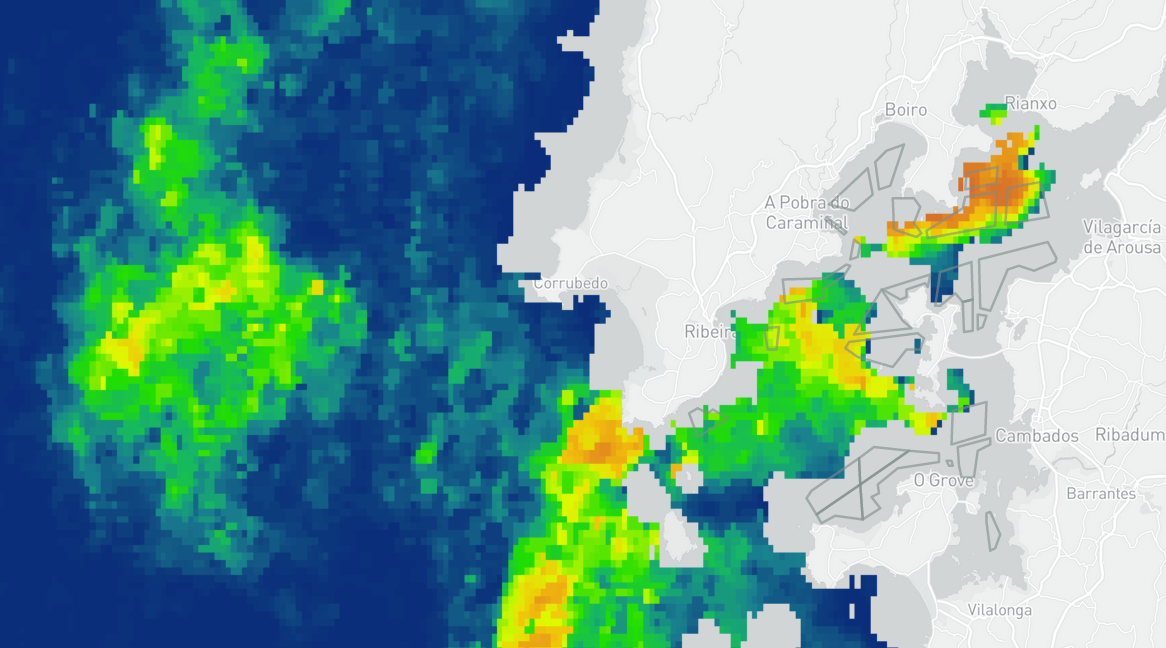
HABs are an increasingly frequent phenomenon in coastal regions around the world. HABs can cause ecosystem damages, since they can be toxic to human health and other organisms, as well as have a strong impact on human activities such as aquaculture. For example, in Galician coast, a site of extensive mussel culture and CoastObs study area, HABs have had an important ecological, economic and social impact since they are often responsible for the closure of the mussel farming polygons. HABs detection and monitoring is traditionally based on direct observations, i.e. field samplings at fixed sampling stations which is cost and labour intensive.
The launch of the Sentinel satellites has opened up new opportunities for consistent monitoring of coastal ecosystem quality. Satellite methods are faster, more cost-effective and produce map outputs providing a more synoptic view of the study area with a good temporal coverage. The development of the CoastObs EO-based products is focused on monitoring the three HAB taxa (namely Pseudo-nitzschia spp., Alexandrium minutum), which are known to cause substantial problems in coastal waters