Result description
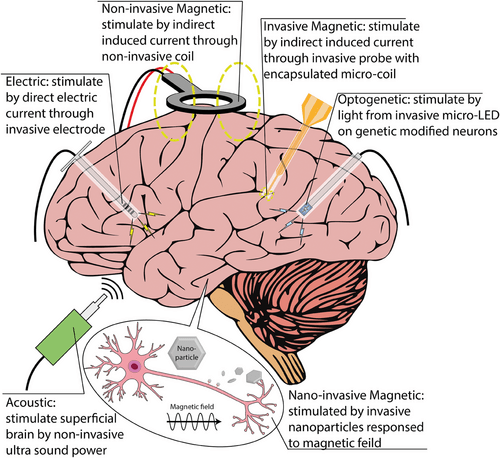
Invasive and nanoinvasive magnetic neurostimulation are two next-generation approaches: invasive methods use implantable microcoils, while nanoinvasive methods use magnetic nanoparticles (MNPs) to achieve high spatial and temporal resolution of magnetic neuromodulation. This review will introduce the working principles, technical details, coil designs, and potential future developments of these approaches from an engineering perspective. Furthermore, the review will discuss state-of-the-art microfabrication in depth due to its irreplaceable role in realizing next-generation magnetic neuromodulation. In addition to reviewing magnetic neuromodulation, this review will cover through-silicon vias (TSV), surface micromachining, photolithography, direct writing, and other fabrication technologies, supported by case studies, providing a framework for the integration of magnetic neuromodulation and microelectronics technologies.
The manufacturing of microcoils for magnetic stimulation presents both challenges and exciting opportunities in advanced medical technologies. Achieving miniaturization is a significant challenge, as a crucial aspect of convenient, portable, and chronic magnetic neurostimulation. The fabrication processes of microcoils, whether TSVs, surface micromachining, or emerging techniques like 3D micro/nanofabrication techniques, require meticulous consideration of materials, size, and operational properties.
Addressing target audiences and expressing needs
- We are sharing our knowledge
- Others/ No specific audience
R&D, Technology and Innovation aspects
Lab demonstration
Result submitted to Horizon Results Platform by FRIEDRICH-ALEXANDER-UNIVERSITAET ERLANGEN-NUERNBERG