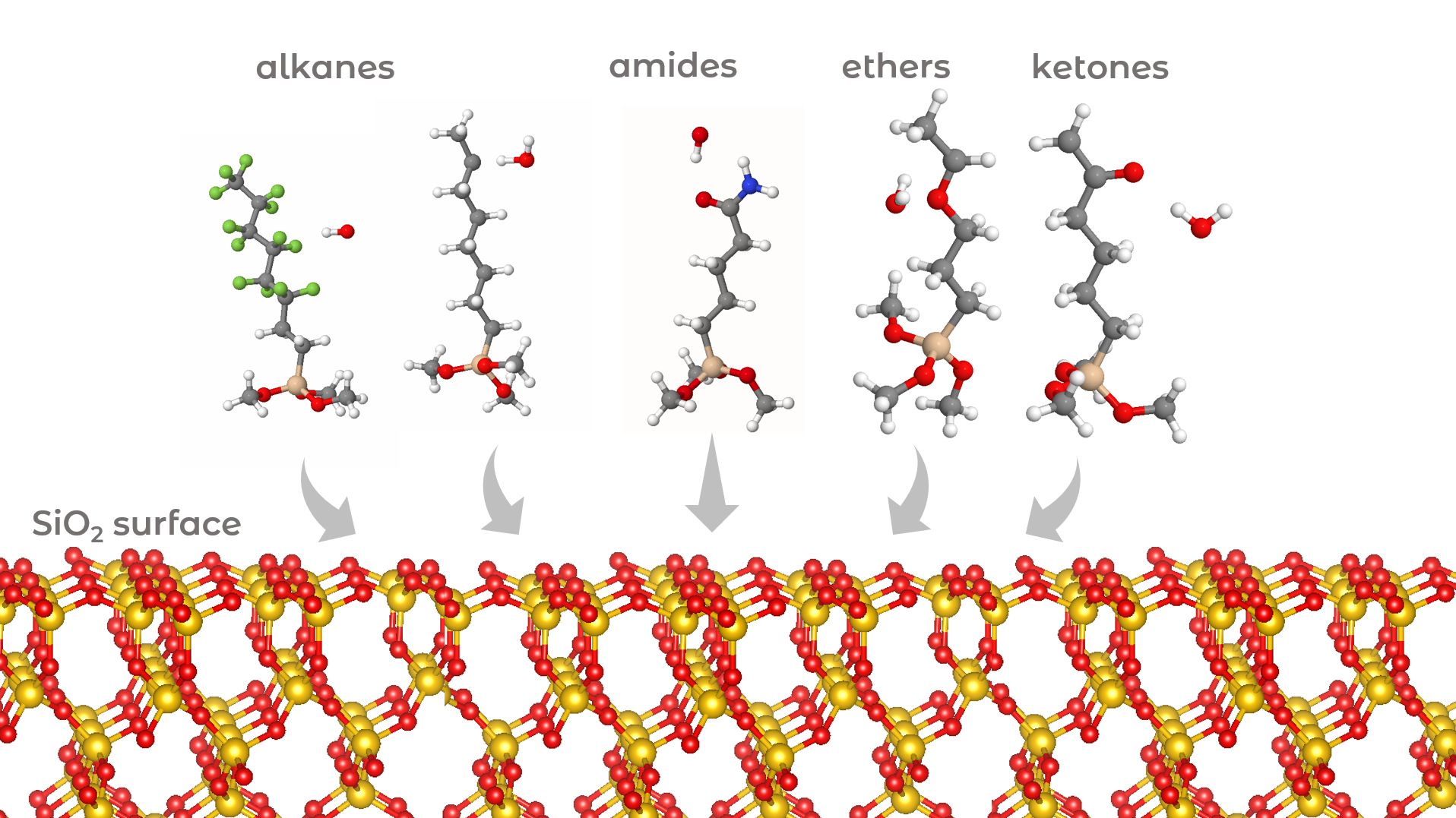

Result description
We developed advanced computer models that simulate how air pollutants like ozone, nitrogen dioxide, and atmospheric radicals interact with sensor materials. These digital tools help predict and improve sensor performance before going to the lab, saving time and cost and enabling the smarter design of next-generation environmental sensors.
This result offers detailed density functional theory (DFT) models that predict how atmospheric gases and radicals interact with both inorganic (Si, SiO2, NiSi) and organic (SAMs) surfaces. These insights help guide sensor design and material choices for better detection performance. We are making these models public to support researchers and developers in designing more reliable and selective sensing platforms.
Addressing target audiences and expressing needs
- Collaboration
- Fellowship to advance my/our research
We seek academic groups, modelling software developers, and sensor R&D teams interested in applying these DFT-based insights to improve their material selection and simulation approaches.
- Public or private funding institutions
- Research and Technology Organisations
- Academia/ Universities
R&D, Technology and Innovation aspects
Our simulation tools are fully developed and validated with experimental data. We seek funding to expand the model’s usability, create a user-friendly interface, and integrate it into sensor design workflows. We welcome interest from private investors, public funders, and tech partners supporting materials and environmental sensing innovation.
Result submitted to Horizon Results Platform by ETHNICON METSOVION POLYTECHNION