

Disclaimer: This summary is provided for informational purposes only and is based on publicly available source material concerning research conducted by Francesco Romano as part of his doctoral work at the University of Stuttgart. The dissertation, “RF Helicon Plasma Thruster for an Atmosphere-Breathing Electric Propulsion System (ABEP),” is available on arXiv under DOI 10.48550/arXiv.2607.02635.
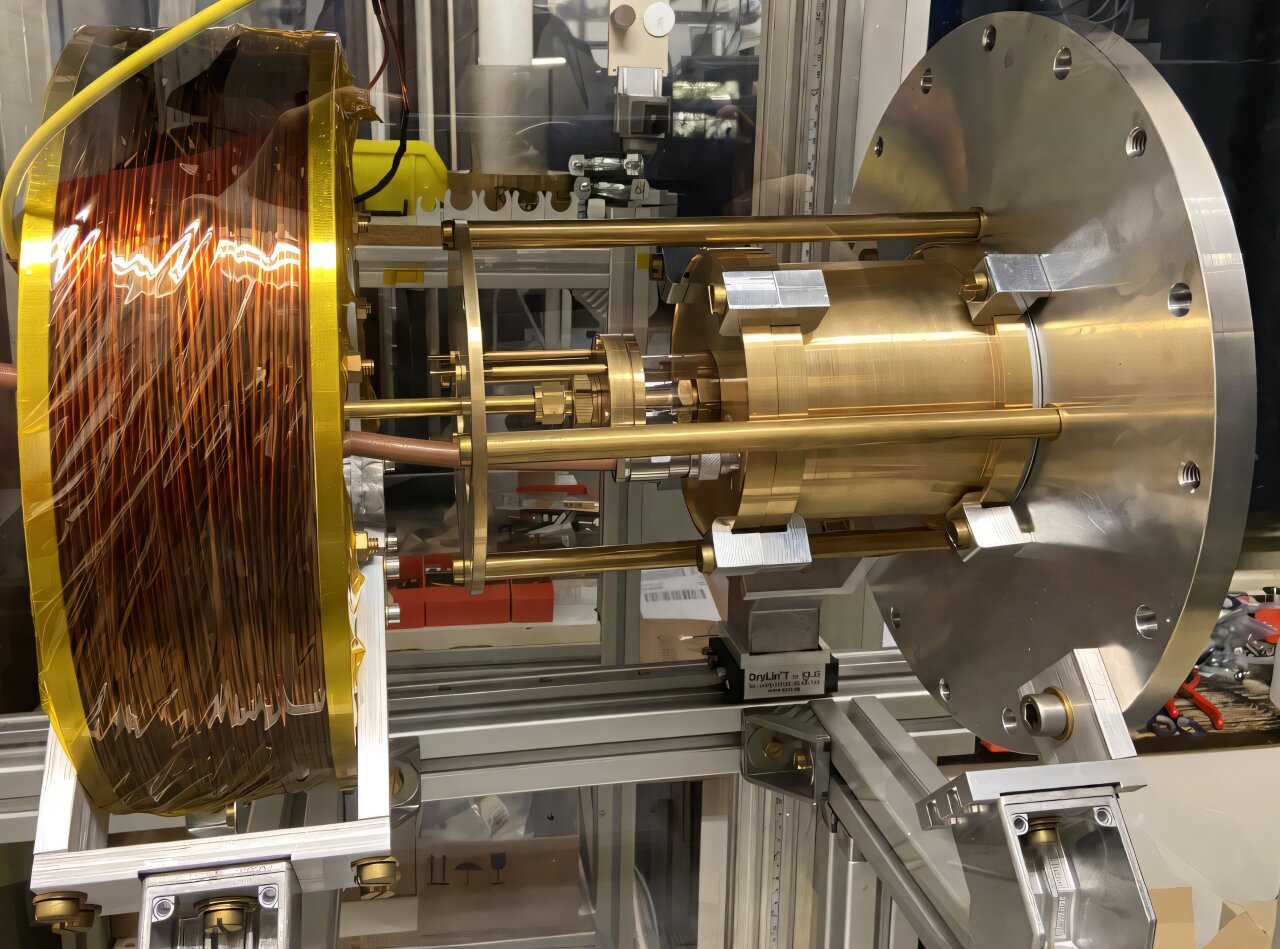
A propulsion system developed through doctoral research at the University of Stuttgart could allow satellites to use gases from the upper atmosphere instead of carrying a conventional propellant supply. The technology is intended primarily for very low Earth orbit, where atmospheric drag would otherwise cause spacecraft to lose altitude rapidly.
The atmosphere-breathing electric propulsion system collects the sparse gas molecules encountered by a spacecraft and feeds them into a radio-frequency helicon plasma thruster. The gas is ionised and accelerated to generate thrust. Because the design has no electrodes or separate neutraliser exposed to the plasma, it could reduce damage caused by highly reactive atomic oxygen.
Several atmospheric-intake configurations were assessed. The most effective was a specular-reflection intake that directed particles into the thruster using surfaces coated with graphite or silicon dioxide. Testing indicated a collection efficiency of approximately 94.3%, with comparatively limited performance loss when the incoming flow was misaligned.
The thruster uses a resonant birdcage antenna inspired by antenna designs employed in magnetic resonance imaging. According to the research, more than 99% of the supplied electrical power could be coupled into the thruster under vacuum conditions. Experimental tests using argon, nitrogen and oxygen demonstrated stable plasma generation at radio-frequency power levels below 60 watts.
System-level modelling suggests that the technology could help satellites maintain orbits at altitudes of approximately 190–250 kilometres without consuming stored propellant. The complete propulsion system was estimated to require less than 1.6 kilowatts of electrical power under the assessed conditions. The concept could potentially also operate in very low Mars orbit by using carbon dioxide from the Martian atmosphere.
The technology has so far been demonstrated under laboratory conditions and has not yet been validated during a space mission. Further development and in-orbit testing would therefore be required before its operational and commercial viability could be established.