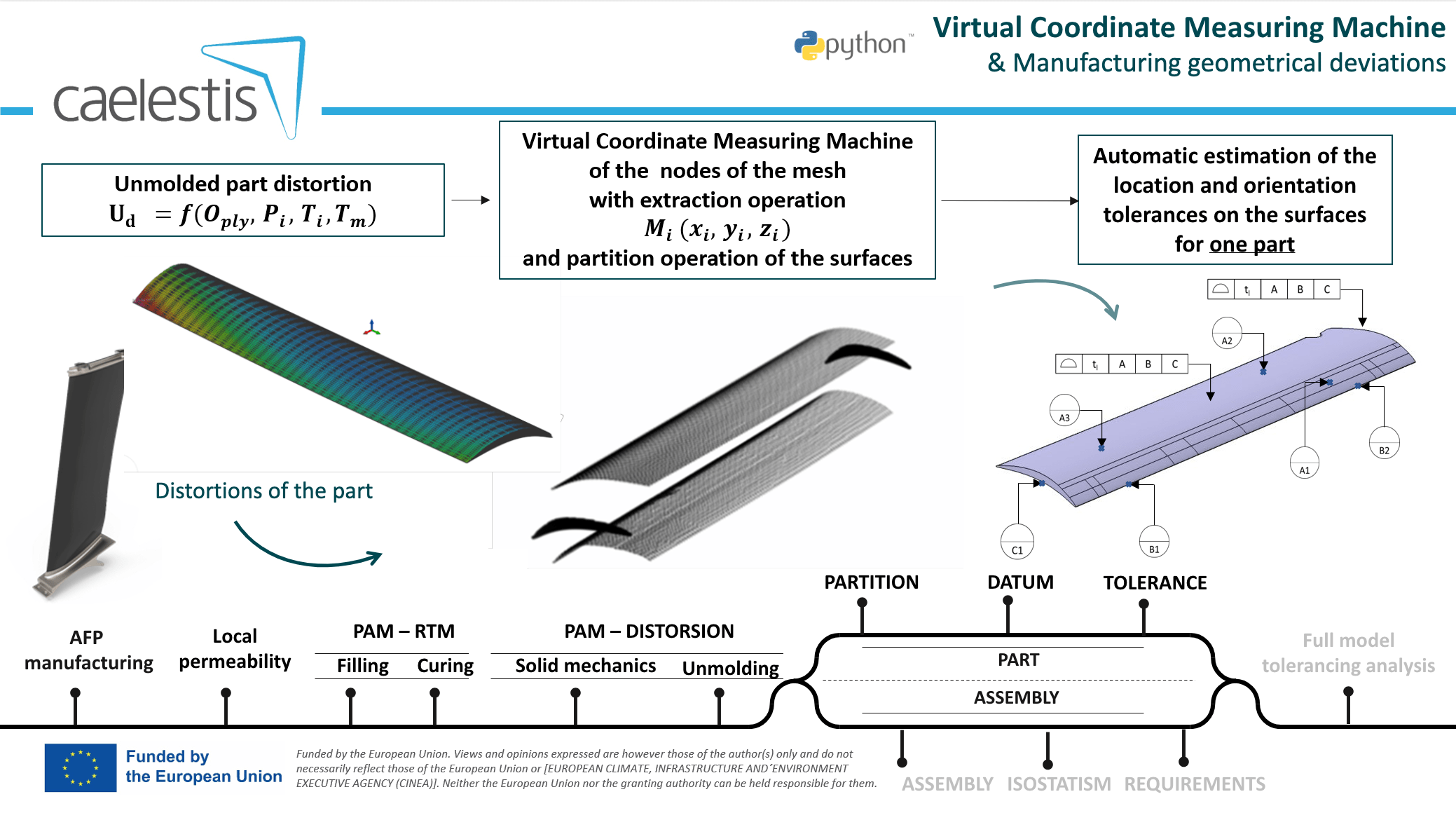
There is a “language barrier” between manufacturing robots and simulation software. AFP machines generate massive amounts of raw data (head positions, timestamps, G-code logs), but this data is unstructured and unusable for physics-based simulations (like RTM flow analysis). Currently, simulations rely on “as-designed” data rather than “as-built” machine data, leading to a gap between the Digital Twin and reality.
We have developed a data processing algorithm (TRL 4) that acts as the “translator.” It ingests raw AFP head position data, filters noise, and maps the robot’s actual trajectory to the 3D geometry of the part. It specifically prepares this data to define permeability zones, effectively linking the physical machine to the virtual surrogate model (WP6.ER03).