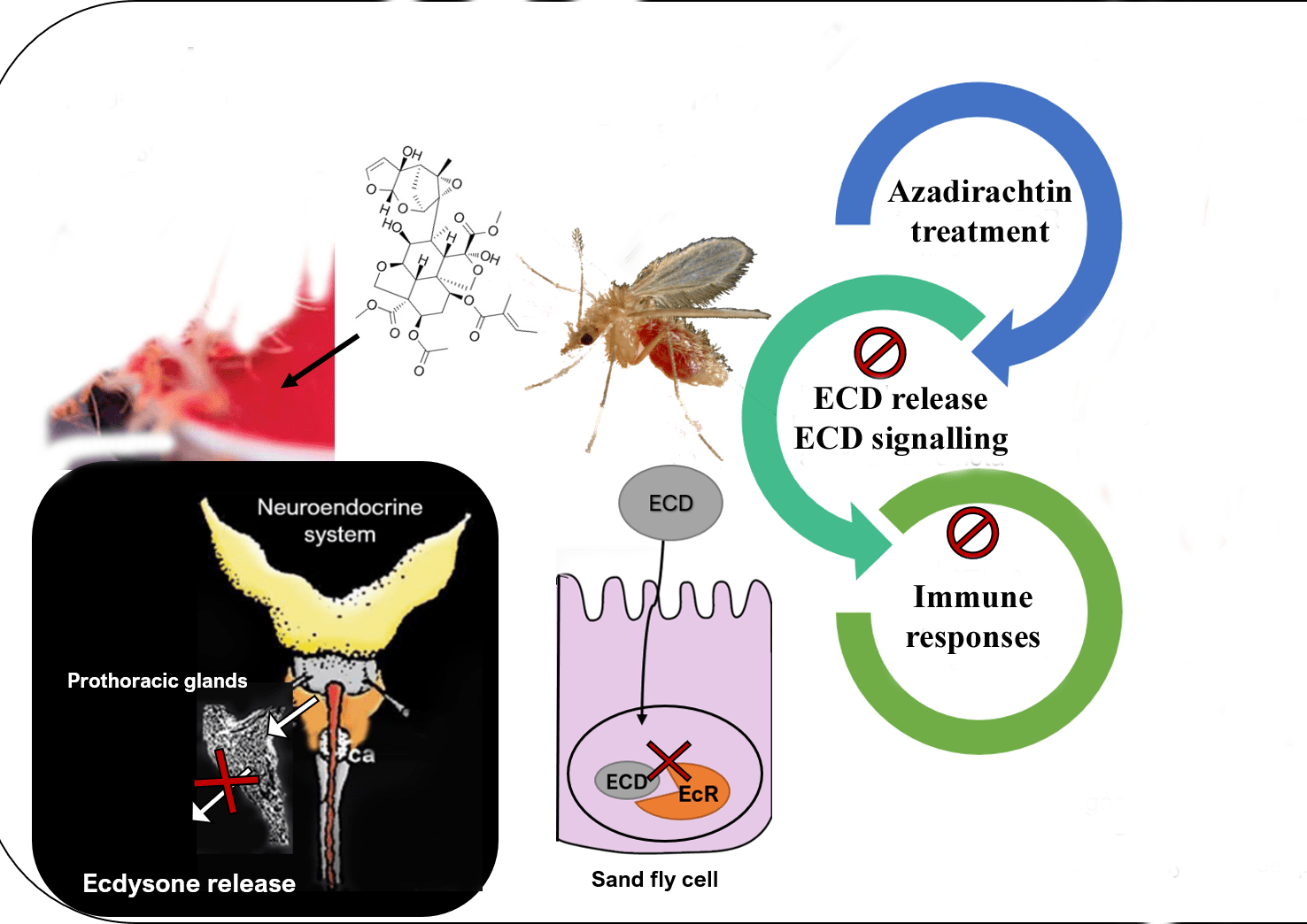
Our research uncovered how a natural plant compound, azadirachtin, interferes with the hormonal system of Phlebotomus perniciosus — the sand fly responsible for transmitting Leishmania infantum, the parasite causing visceral leishmaniasis.
When exposed to azadirachtin, sand fly larvae failed to grow properly, and key genes controlling their development and immune defenses were turned off. Remarkably, when the natural insect hormone ecdysone was added together with azadirachtin, normal growth and immune gene activity were restored.
This discovery demonstrates that ecdysone is essential for both development and immunity in sand flies. By revealing this hormonal control, our work opens new possibilities to disrupt parasite transmission using environmentally friendly strategies that act on the insect’s physiology rather than relying on insecticides.
The findings are relevant not only for leishmaniasis control but also for understanding how hormones regulate immunity in other insect disease vectors, such as mosquitoes and tsetse flies.