Result description
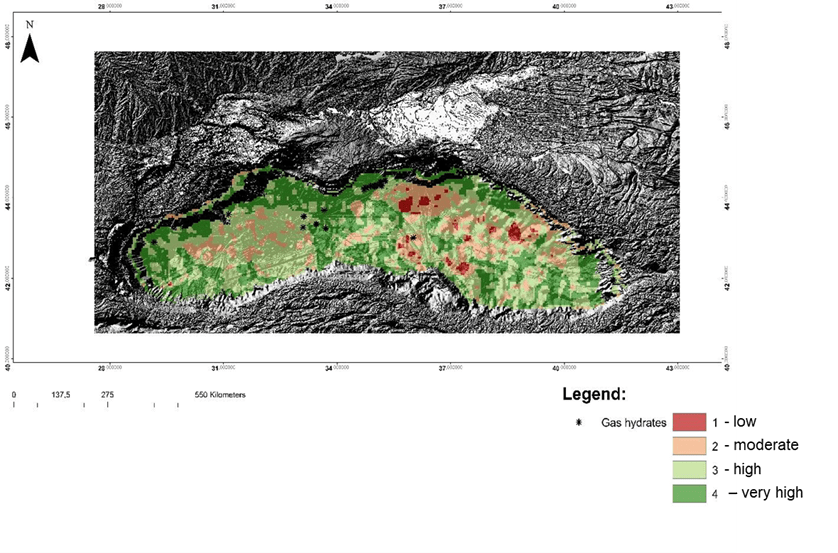
This result presents the first basin-wide assessment of gas hydrate abundance and seafloor slope stability in the Black Sea. It integrates seismic, geochemical, and modelling data from multiple oceanographic cruises coordinated under the H2020 DOORS project. The study refines estimates of methane stored in sediment-hosted hydrates, defines the gas hydrate stability and occurrence zones, and analyses their relation to seafloor deformation and slope failure. It also investigates how Earth tides and pore pressure variations can trigger methane release from shallow faults. The findings improve understanding of marine geohazards, methane cycling, and climate feedbacks in semi-enclosed basins. The dataset, models, and methodologies are openly available for collaboration, providing a scientific basis for further research, monitoring, and policy actions supporting EU climate resilience and sustainable Blue Economy objectives.
Addressing target audiences and expressing needs
- To raise awareness and possibly influence policy
- Collaboration
We are seeking collaborations with research organisations, technology developers, and policy institutions to advance data integration, modelling, and monitoring of gas hydrates and seafloor stability. Partnerships are welcome to translate our findings into marine risk management and Blue Economy strategies.
- Public or private funding institutions
- EU and Member State Policy-makers
- Research and Technology Organisations
R&D, Technology and Innovation aspects
The result is at the research and validation stage, with data and models consolidated through recent Black Sea expeditions. Next steps include expanding regional datasets, improving predictive modelling, and fostering collaborations to apply findings in marine risk assessment and climate policy.
Result submitted to Horizon Results Platform by DERZHAVNA NAUKOVA USTANOVA TSENTR PROBLEM MORSKOYI HEOLOGII HEOEKOLOHIYI TA OSADOVOHO RUDOUTVORENNIA NANUKRAINY DNU MORHEOEKOTSENTR NAN UKRAINY