Result description
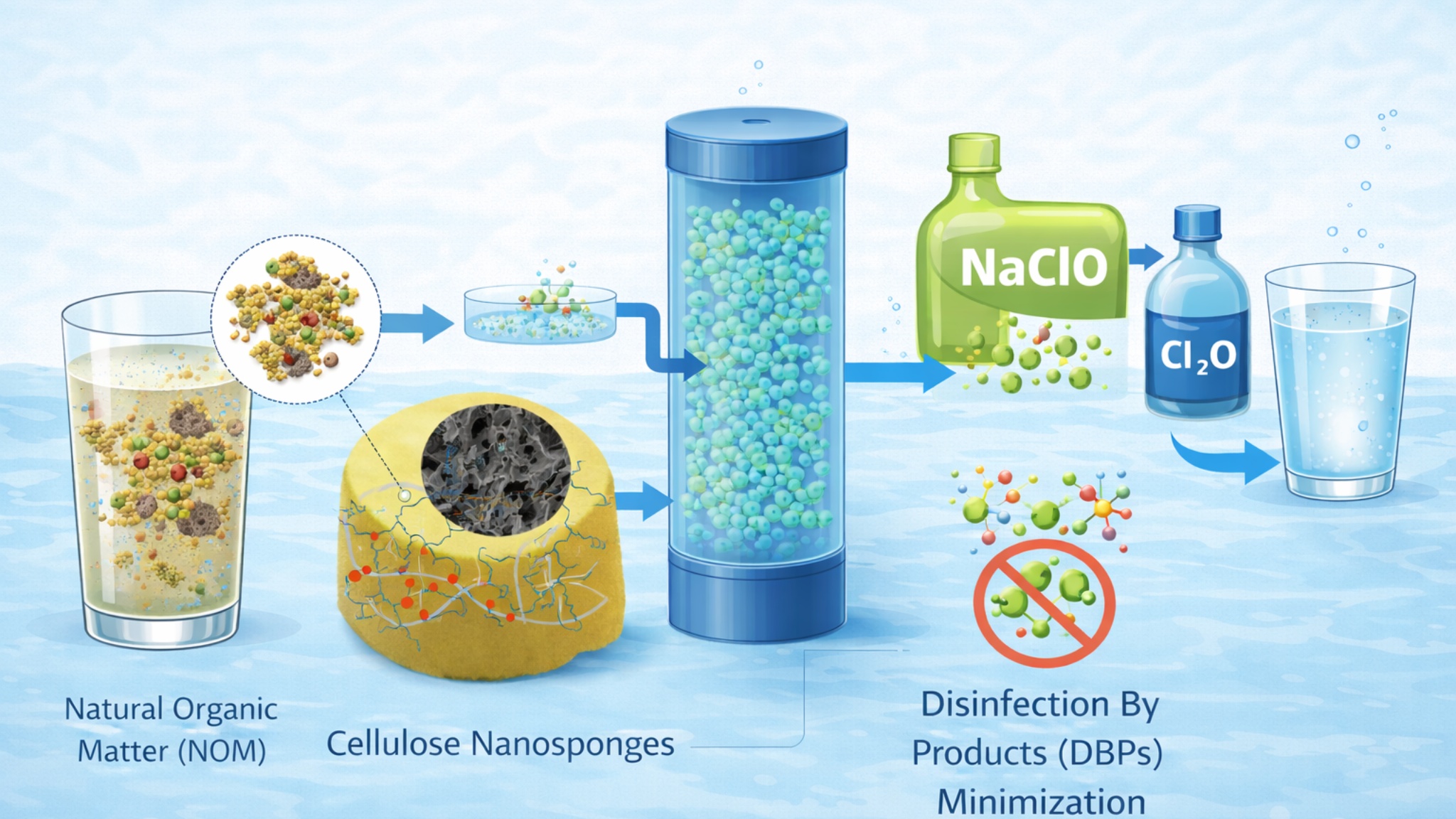
Innovative sorbent materials, cellulose-based nanosponges (CNS), have been purposely designed and successfully developed to improve drinking water treatment processes by effectively removing Normal Organic Matter (NOM) before disinfection step. The testing of new CNS indicates that they can provide competitive performances compared to commercial activated carbons in terms of NOM removal. This adsorption pre-treatment guarantees a significant reduction of disinfection by-products (DBPs), with an efficiency and selectivity which can be modulated in order to adsorb NOM components mostly related to DBPs formation. The materials have been developed following the “safer and sustainable by design” rule, according to easy-to-handle and scalable processes.
Addressing target audiences and expressing needs
- Grants and Subsidies
- Other blended financing
- Collaboration
We are looking for future research collaborations with academia or industry to reach higher TRLs and implement our results in real scenarios.
- Public or private funding institutions
- Research and Technology Organisations
- Academia/ Universities
R&D, Technology and Innovation aspects
Materials’ production and water treatment testing have been validated at lab-scale (TRL4). The efficiency in NOM removal and DBPs reduction has been validated. Next steps require long-term stability evaluation for the new materials, testing in real scenarios and scale-up of CNS production process.
CNS synthesis consists of a simple formulation of different components at optimized relative ratios in water, followed by standard thermal treatments (freezing, liophilization and heating at temperatures lower than 100 °C). Formulation can be modified according to the final target. Adsorption performances have been replicated and validated at lab scale, simulating real scenarios.
Referring to the result (and not to the buisness model which is not developed yet) Sustainability is addressed by proper choice of feedsstocks for the production of the sorbent materials, ecosafety evaluation of developed products, simple process design, reusability of sorbent materials by regeneration, easy disposal by combustion at the end of life.