Result description
Empower your community with digital local currencies. The Local for Local software stack provides municipalities, SMEs, and NGOs with a ready-to-use, modular platform to launch and manage secure, scalable community currencies—without reinventing the wheel.
The Local for Local software stack is a modular, open-source set of digital tools that enables regions to run and manage local currencies. It combines secure payment mechanisms, integration with existing IT systems, and monitoring tools. The stack ensures that local communities, municipalities, and SMEs can adopt digital local currencies without needing to build their own infrastructure from scratch.
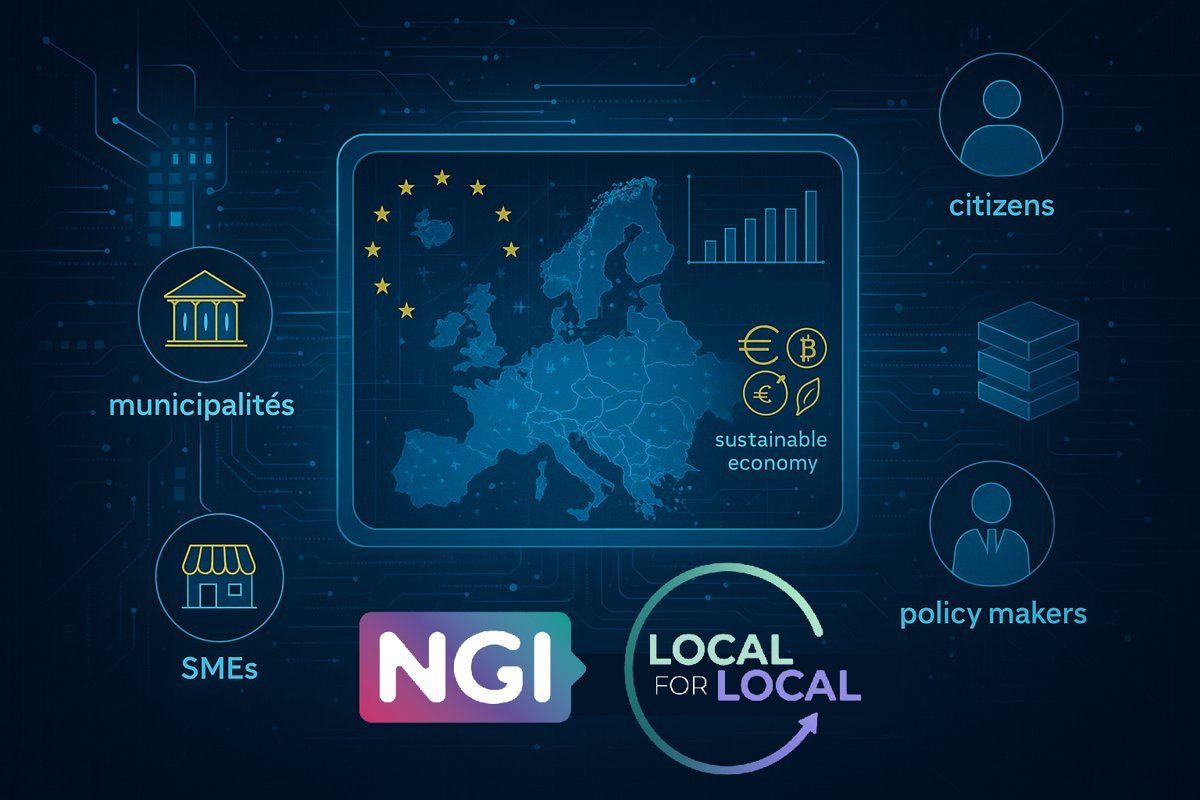
Addressing target audiences and expressing needs
- Business partners – SMEs, Entrepreneurs, Large Corporations
- Incubators / Accelerators
- Technology Transfer Expertise
Municipalities & Local Governments → Need tested, secure digital tools
SMEs & Local Businesses → Need alternative trading systems
NGOs & Community Organisations → Need accessible infrastructures
Researchers & Developers → Need open, extensible software modules
Policy Makers & EU Networks → Need demonstrators of interoperable, sustainable local digital economies to inform EU proximity economy strategies.
- Public or private funding institutions
- Other Actors who can help us fulfil our market potential
- Research and Technology Organisations
R&D, Technology and Innovation aspects
The Local for Local software stack is fully developed, with the core platform operational and additional modules contributed by partners. The next steps focus on scaling through regional pilots, integrating new components, and building a European federation of interoperable local currencies to ensure long-term impact.
The Local for Local software stack is designed to scale efficiently across regions. As an open-source, modular platform, it allows new municipalities, SMEs, and NGOs to adopt tested components without having to develop their own infrastructure. This keeps marginal costs low while ensuring quick and reliable deployment.
The model is further strengthened by interoperability: each new community that joins benefits from existing modules and contributes to a growing federation of local currencies. This creates network effects—more participants increase the value of the ecosystem—which supports long-term sustainability.
Finally, the open nature of the stack enables service providers to build viable business models around hosting, integration, and training. This combination of shared technology, local ownership, and replicable services ensures that the platform can grow from regional pilots to a Europe-wide infrastructure for digital local currencies.
The Local for Local software stack delivers results that are inherently replicable across different regions and contexts. Its modular and open-source architecture ensures that communities can adopt and adapt the solution without rebuilding core functionalities. Standardised interfaces and documentation make it straightforward for new municipalities, SMEs, or NGOs to integrate the stack into their local operations.
Replicability has already been demonstrated in practice: the stack can be deployed in multiple European regions with diverse legal, cultural, and economic environments. Each deployment reuses the same backbone while allowing local adaptations, confirming that the results are transferable and not limited to a single pilot.
By lowering entry barriers and providing reusable tools, the stack enables any community to replicate successful implementations. This supports broader EU goals of diffusion, interoperability, and federation of local currencies across Europe.
The Local for Local software stack ensures long-term sustainability through its open-source foundation and federated governance model. By avoiding license fees and relying on shared components, communities can continue using and extending the platform without recurring high costs.
Service providers, municipalities, and NGOs can build stable revenue streams around hosting, integration, and support services. These value-added activities create financial incentives for ongoing maintenance and innovation, ensuring the platform does not depend solely on project funding.
Finally, the federation of interoperable local currencies creates strong network effects. As more regions adopt the stack, the ecosystem becomes self-reinforcing, reducing costs per deployment and increasing its overall value. This combination of low-cost adoption, replicable service models, and growing network effects guarantees sustainability well beyond the lifetime of the project.
Result submitted to Horizon Results Platform by CENTRIC NETHERLANDS BV