Result description
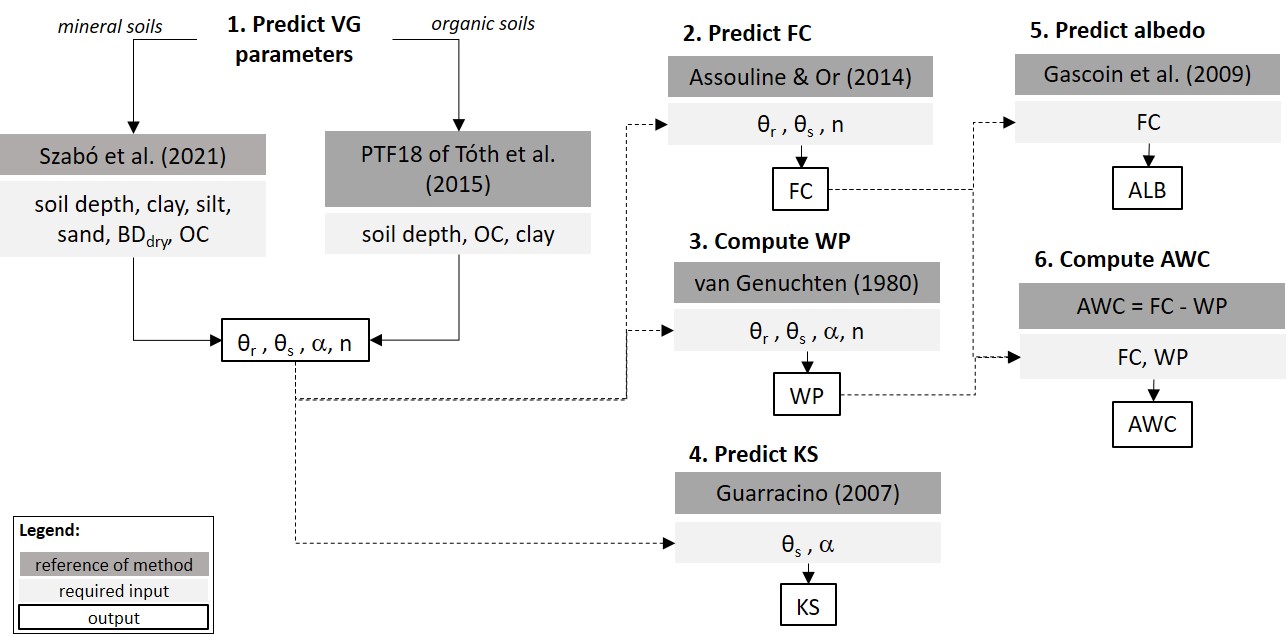
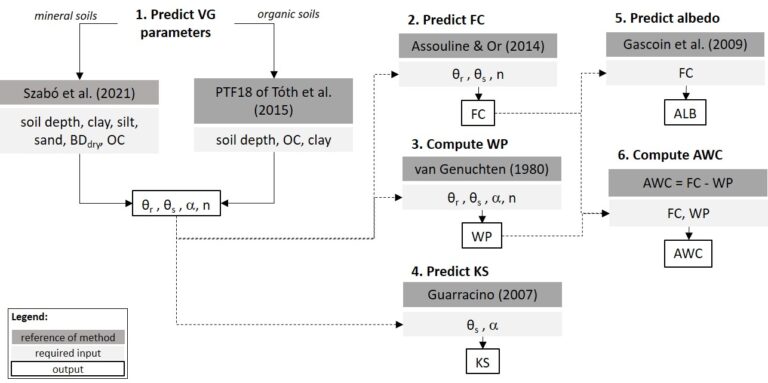
This result provides open-access R scripts and harmonised workflows to derive soil physical, hydraulic, and nutrient properties for improved environmental modelling. The approach combines LUCAS topsoil data, regional soil datasets, pedotransfer functions (e.g., van Genuchten parameters, hydraulic conductivity estimation), and geospatial analysis to generate complete, multi-layer soil profiles for each case-study region.
The scripts enable the estimation of hydraulic parameters, nutrient properties such as Olsen-P, and model-ready inputs aligned with SWAT+ requirements. By ensuring harmonised, transparent, and reproducible derivations, the workflow reduces inconsistencies in soil datasets and improves the accuracy and comparability of environmental simulations across case studies. The scalable, open-source methodology supports long-term reuse beyond the OPTAIN project.
Addressing target audiences and expressing needs
- Help in technical expertise
- Collaboration
Partners who can test the R scripts with diverse soil datasets, provide feedback for improving prediction methods, and explore further applications in hydrological and soil modelling.
- Research and Technology Organisations
R&D, Technology and Innovation aspects
The open-access R scripts to derive soil properties are fully developed, validated, and documented for use in environmental modelling. They have been applied within OPTAIN case studies and integrated into SWAT+ simulations. Future steps focus on continuous updates of estimation methods, and integration into future research and advisory projects to ensure long-term sustainability.
The R scripts are fully scalable across different regions, catchments, and soil types. They can process a wide range of soil datasets and generate SWAT+-ready soil tables for multiple applications, supporting environmental modelling at local, regional, and pan-European levels.
The scripts are freely available, adaptable to new datasets or regions, and provide reproducible outputs, making them suitable for replication and further research.
The R scripts are open-access, documented, and archived in GitHub and Zenodo, ensuring long-term availability. Their reproducible workflows and adaptable structure allow continued use, updates, and integration into new projects, supporting sustainable research and environmental modelling.
- Global
- Europe