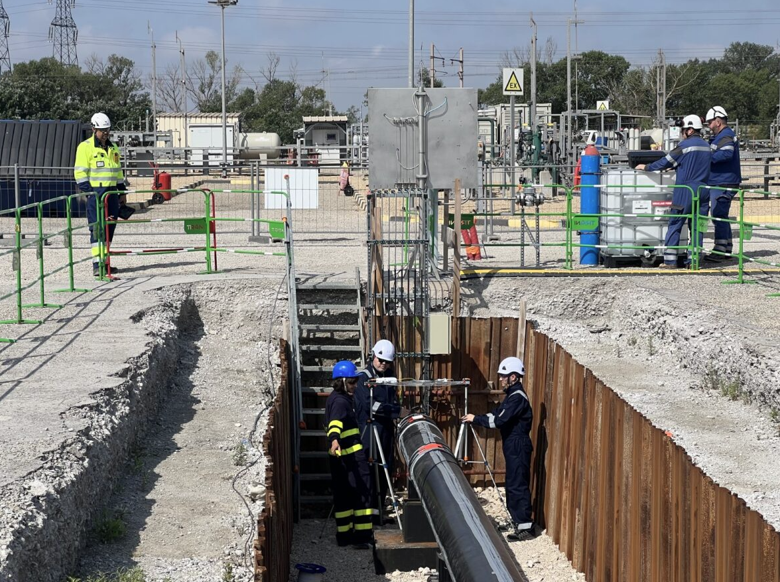
Result description
Innovative optical fibre sensing system for hydrogen leak detection based on Fibre Bragg Grating (FBG) sensors with hydrogen-sensitive coatings. The system enables continuous and early detection of hydrogen leaks in confined and semi-confined hydrogen infrastructures.
Key features include:
· High sensitivity hydrogen detection (down to ~100 ppm demonstrated in field conditions)
· Intrinsically safe optical sensing technology
· Multiplexing capability enabling up to 100 sensors along a single optical fibre
· Compatibility with industrial monitoring platforms and SCADA systems
-> Ideal use case: confined spaces (compression equipment, electrolysers, etc)
Addressing target audiences and expressing needs
- Business plan development
- Expanding to more markets /finding new customers
- Use of research Infrastructure
Considering the system’s maturity and European initiatives targeting TRL 7–8 demonstration environments, the project foresees continued development through long-term pilot installations over 2–3 years. These pilots will contribute to continuing R&D developments and preparing the system for industrial certification and market entry.
- Other Actors who can help us fulfil our market potential
- Research and Technology Organisations
- Academia/ Universities
R&D, Technology and Innovation aspects
The sensing system has been validated through laboratory testing and demonstrations in hydrogen environments within the OPTHYCS project. Current developments focus on improving sensor durability, calibration stability and system integration in real industrial conditions. Future work will address pilot installations and preparation for industrial deployment.
Replicability analysis demonstrate that the technology present a strong potential for future deployment within hydrogen infrastructures. The sensing system can be deployed across a wide range of hydrogen infrastructures thanks to its fibre-optic multiplexing capability, allowing multiple sensing points to be monitored with a single fibre. The interrogation unit supports multiple fibres (up to 16 channels), enabling scalable and cost-effective deployments.
If a sensor is damaged, it can be replaced without modifying the installation by simply splicing a new sensor into the fibre.