Result description
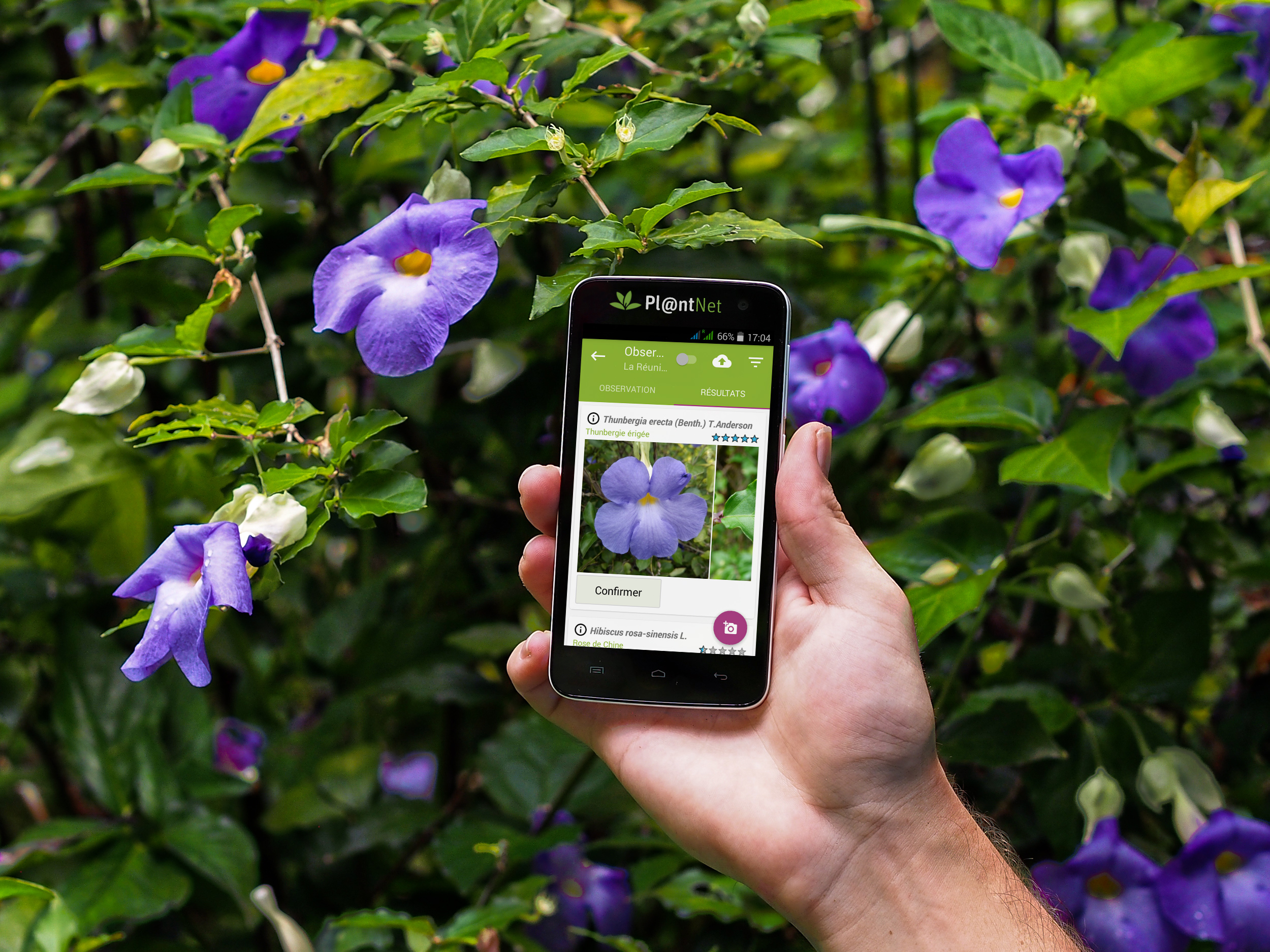
Pl@ntNet is a citizen science platform co-developed since 2009 by a consortium of research organisations. Pl@ntNet has four main access doors (Pl@ntNet android, Pl@ntNet iOS, Pl@ntNet web, Pl@ntNet API) and is based on a cooperative learning principle. Several core evolutions of Pl@ntNet have been designed and developed in the past few years, including :
- the migration of the platform to a regionalised global flora, that covers more than 70K plant species at the world level,
- the extension of the platform to manage vegetation images (in particular quadrat images, or images coming from on-board sensors,
- the development of a set of APIs, available from https://my.plantnet.org/, which allow developers to use identification services within their own workflows.
The platform now has nearly 20 million annual users of its mobile applications, 9 million annual users of its web application (https://identify.plantnet.org/), and nearly 18,000 user accounts of its API (https://my.plantnet.org/).
Addressing target audiences and expressing needs
- To raise awareness and possibly influence policy
- Collaboration
The main problem addressed by the Pl@ntNet is the lack of accessible, reliable and cost-effective botanical expertise within research teams, decision-making groups and the general public. To address this, we are interested in collaborations with stakeholders with networks of field actors or specialists who wish to participate in the improvement of this identification service by providing additional visual data, carrying out evaluations on new geographical/ecological/taxonomic contexts, or by the large-scale exploitation of our services.
- EU and Member State Policy-makers
- Research and Technology Organisations
- Private Investors
R&D, Technology and Innovation aspects
Our technology development plan includes:
- continued multi-species data collection, with the gradual opening of the dedicated web interface and API,
- exploitation of the latest botanical information from leading international platforms (WCVP, WFO, IUCN, GBIF, etc.).
- continuous improvement of identification performance, spatial and temporal management of plots for monitoring areas of interest.
The platform has processed more than 1.3 billion identification requests since its launch, with more than 100 million requests processed per year. It has nearly 20 million annual users, so nearly 8 million with a user account. More detailed statistics are available at: https://identify.plantnet.org/stats
All of the platform’s services are available worldwide. They cover vascular plants (cf. Tracheophytes) and do not allow the identification of mosses, algae, lichens, or fungi.
The service is freely accessible via the Pl@ntNet platform, allowing users worldwide to identify plant species free of charge. Users with dedicated access rights (currently more than a hundred user accounts) can upload HD images and receive automated plant species communities identifications via an intuitive web interface, thus encouraging broad participation in biodiversity monitoring.
For intensive use, the service is available at my.plantnet.org, offering customized solutions for organizations or projects requiring significant data processing or tailored features. These advanced services are accessible via subscription (https://my.plantnet.org/pricing), providing a sustainable revenue model to support the platform’s development and scalability.
- Global
Result submitted to Horizon Results Platform by CENTRE DE COOPERATION INTERNATIONALE EN RECHERCHE AGRONOMIQUE POUR LEDEVELOPPEMENT – C.I.R.A.D. EPIC