
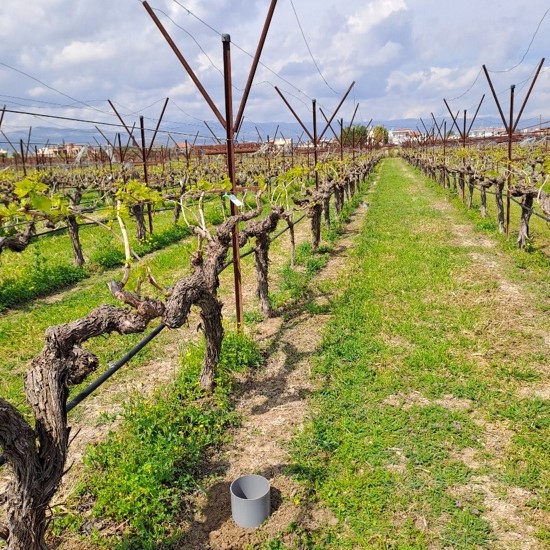
Result description
The proposed technology integrates three core organic farming practices tested in commercial vineyards under the ECONUTRI and Laboratory of Viticulture (AUA) framework:
1. Cultivation of winter legumes (e.g., Vicia faba) as green manure to biologically fix atmospheric nitrogen and reduce the need for synthetic fertilizers.
2. Non-cultivation combined with mowing to minimize soil disturbance, preserve soil structure, and stabilize microbial activity.
3. Use of wooden residues and grape marcs as high-carbon organic amendments, promoting microbial nitrogen immobilization and improving water retention.
These practices were evaluated through on-farm experiments, where vine physiological responses (photosynthesis, transpiration, respiration) and grape quality indicators (sugar content, acidity, phenolic composition) were measured to assess both environmental and agronomic outcomes.
Addressing target audiences and expressing needs
- We are sharing our knowledge
Reducing GHG emissions through organic farming practices in viticulture
- Others/ No specific audience
R&D, Technology and Innovation aspects
Reduction of GHG emissions in vineyards by applying organic fertilization practices