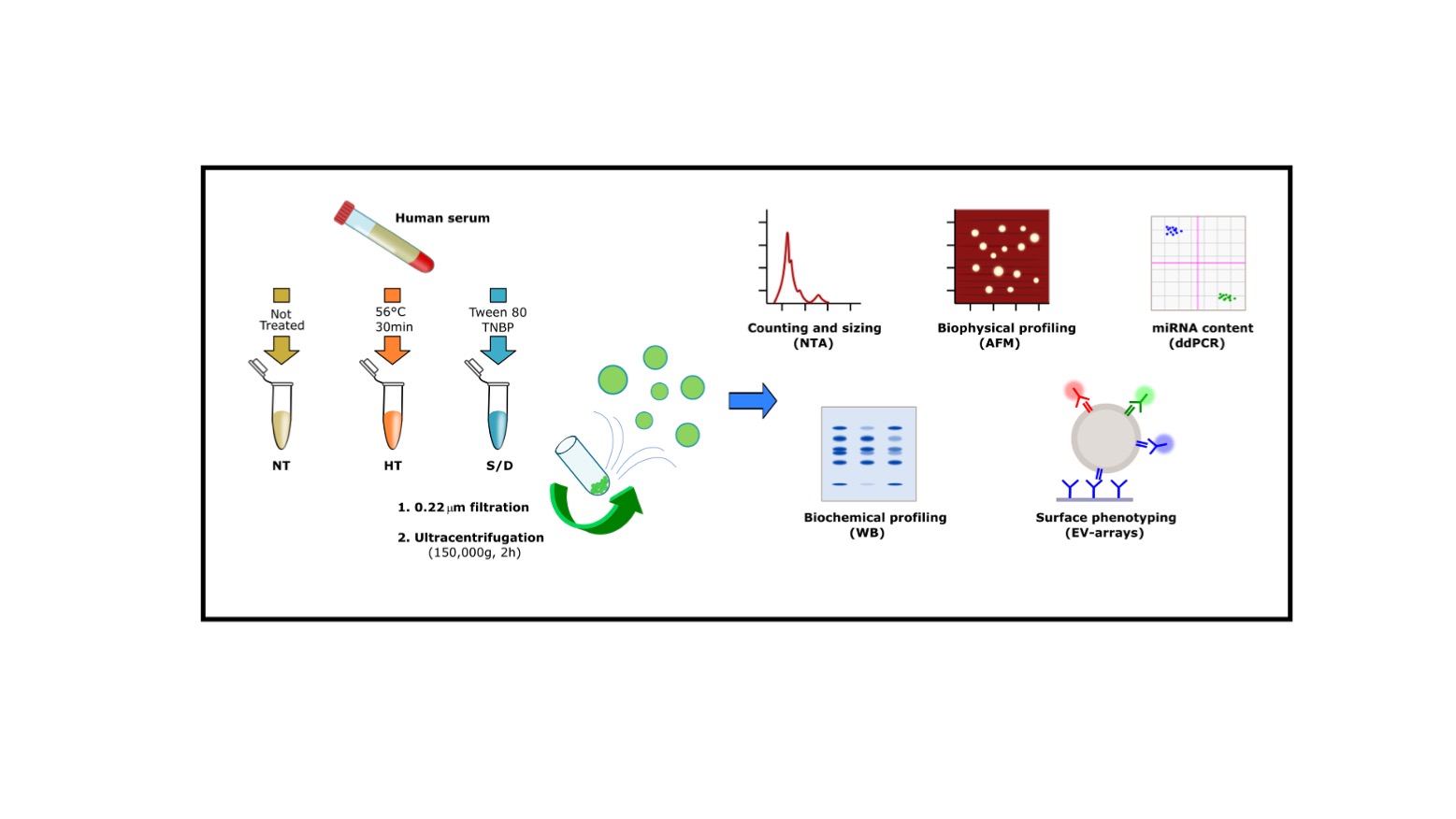
Since the outbreak of COVID-19 crisis, the handling of biological samples from confirmed or suspected SARS-CoV-2 positive individuals demanded the use of inactivation protocols to ensure laboratory operators safety. While not standardized, these practices can be roughly divided in two categories, namely heat inactivation and solvent-detergent treatments. Assessing the impact of virus inactivating pre-treatments is of pivotal importance, given the well-known variability introduced by different pre-analytical steps on downstream EVs isolation and analysis.
Our data suggest an increase in ultracentrifugation (UC) recovery following heat treatment; however, it is accompanied by a marked enrichment in EVs-associated contaminants. On the other hand, solvent/detergent treatment is promising for small EVs (<150 nm range), yet a depletion of larger vesicular entities was detected. This work represents a first step towards the identification of optimal serum inactivation protocols targeted to EVs analysis.