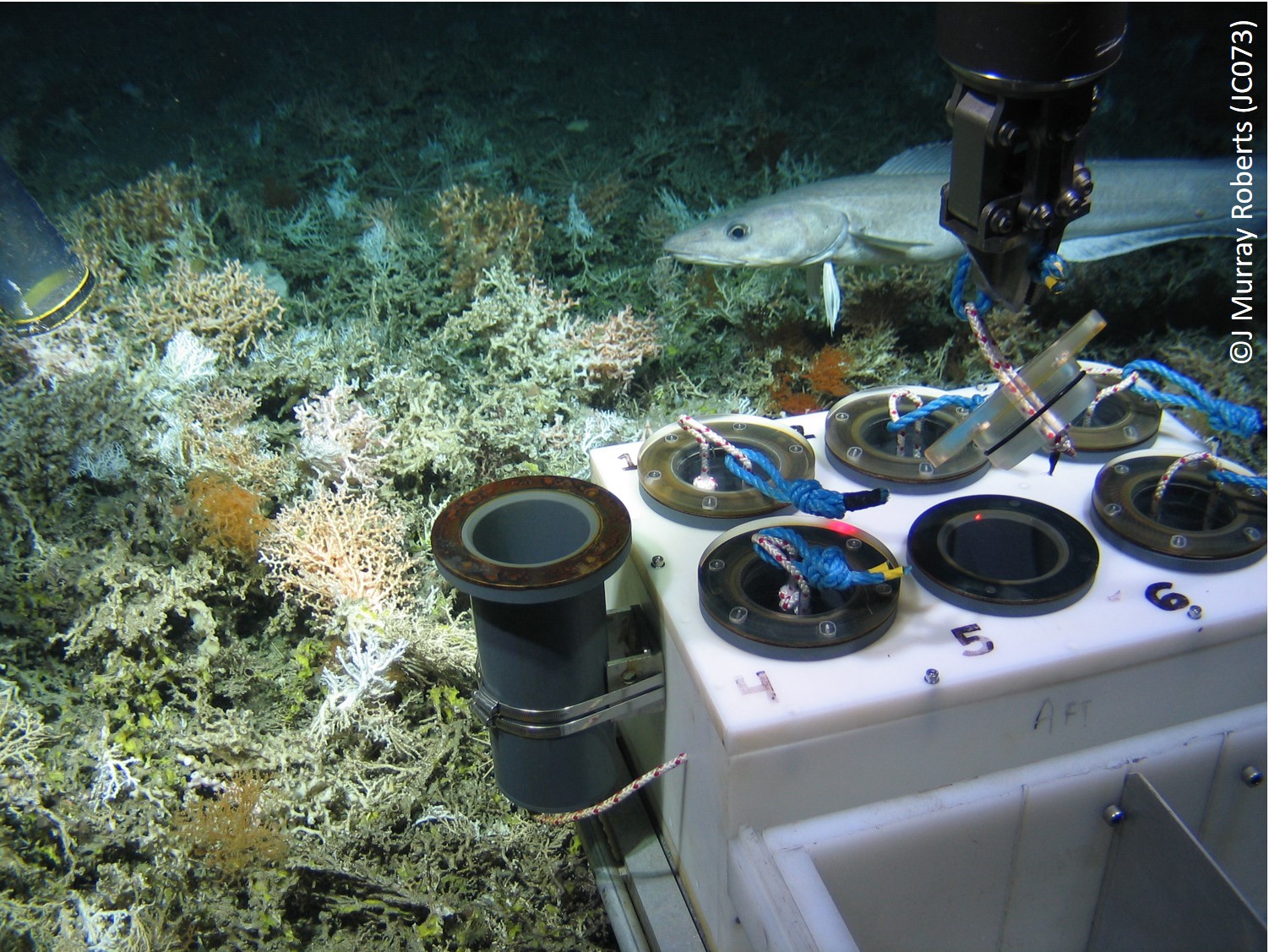
The biomass of the sponge Spongosorites coralliophaga, and the coral Lophelia pertusa were calculated from images that were extracted from remotely operated video footage. Environmental variables derived from acoustic data (depth, BPI, rugosity, backscatter, slope) were used to create a biomass predictive map with a random forest model approach. From this map we could estimate standing stock biomass, the annual carbon turnover and explore the potential food supply to the reef.
The total overturn of organic carbon at the Mingulay reef was estimated with L. pertusa coral rubble and S. coralliophaga being the largest contributors toward carbon turn-over in the area. We also calculated the additional supply of organic matter to the reef through tidal downwelling.
This study is the first to estimate whole-reef cold-water coral biomass and advances our understanding of the complexity (variability and distribution) of community metabolism within the CWC reef. The methodology has the potential to be applied to other under-water habitats and increase understanding of carbon turnover at an ecosystem scale.